Open resource · Edition 1, September 2026

The Human Hair Atlas.

How different hair sits on the head, where the Syn-R1 electrode reaches the scalp, and where it does not. Written for technicians, researchers and anyone planning a recording. Free to read, free to use, ours to keep honest.

Why it exists

Contact decides the recording.

EEG measures voltages a few millionths of a volt in size, at the scalp. An electrode that is not properly on the scalp still produces a trace. It just produces a worse one: higher noise, slow drift, more mains interference, more movement artefact. None of that can be repaired afterwards.

Most EEG hardware was designed around straight and wavy hair. On curly, coily and textured hair, electrodes sit on the hair rather than the scalp. Participants have been excluded, and data discarded, because of it.

The published evidence →
Curl types 1a to 4c shown strand by strand. Every strand is the same true length; what changes is how far it reaches from the scalp.
Curl types 1a to 4c. Every strand is the same true length.
How to read it

Three labels, and we use the third one.

Every style below carries one. The point of publishing this is that the third label exists.

Works so far

We have used it on this and it reached the scalp. Not yet measured across enough people to call it proven.

Should work

Same mechanism, but we have not done it often enough to say.

Not yet

No electrode does this today, ours included. It needs a solution.

By style

Style matters more than curl type.

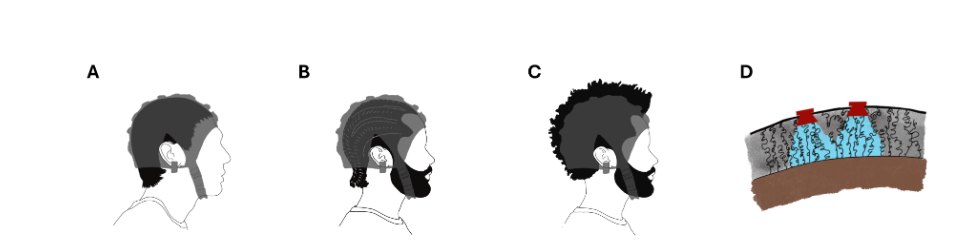
A shrunk afro and a braided head can be the same hair and behave nothing alike. What decides a session is how much hair sits between cap and scalp, and whether that hair is loose or bound.

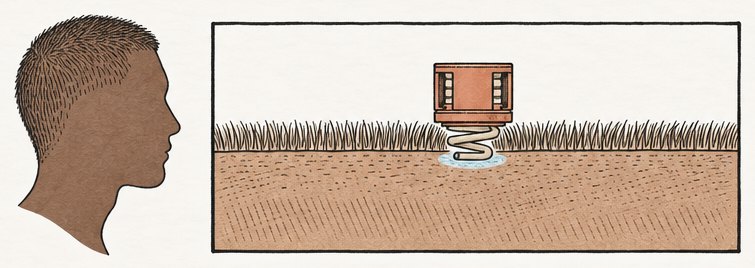
Cross-section of the electrode in short hair, the cap holding the pellet down
Works so far

Short hair: shaved, buzz, fade, TWA

Almost nothing between cap and scalp. The cap compresses what hair there is and holds the pellet down. Few turns needed. Watch for gel on stubble at the mastoid reference.

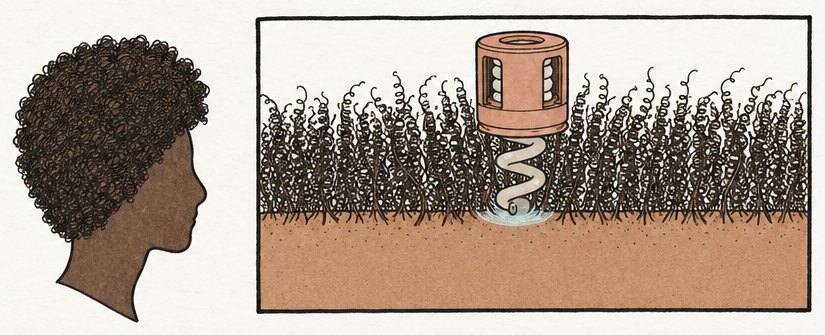
Cross-section of the coil threading through loose coily hair to reach the scalp
Works so far

Loose natural hair and afros

Deep and springy, and the whole cap sits higher because of it. The coil threads down and the gel connects at the tip. Afros up to about 60 mm tall reach the scalp.

Past that the tip runs out. Tall hair can also push a coil off its site, so check the tip is still where you put it.

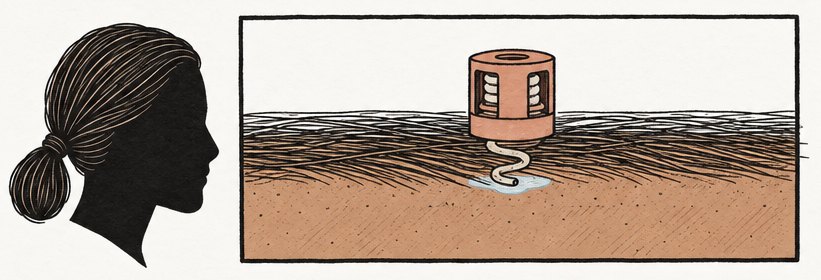
Cross-section of the electrode in long straight hair
Works so far

Long straight or wavy hair

Not deep, but a lot of it. Standard placement. Tie it low: a bun or ponytail under the cap lifts the occipital sites.

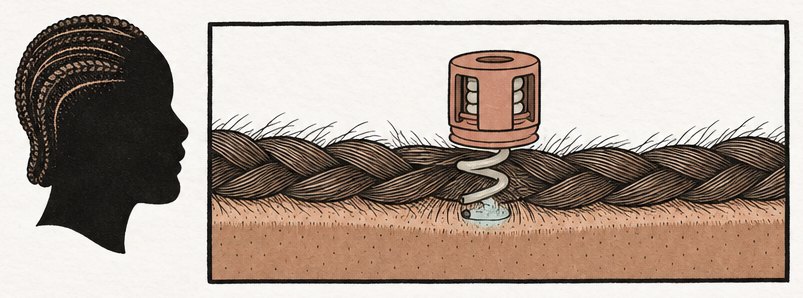
Cross-section showing routes into cornrowed hair: through the braid, between rows, and at the pulled strands near the root
Works so far

Cornrows, flat twists and feed-in braids

Rows of hair with bare scalp between them. There is more than one route in: through small braids, between them, and through the pulled strands at the root.

Start on the site. If it stalls, move to the nearest part and note the offset. Do not assume every braided head behaves the same.

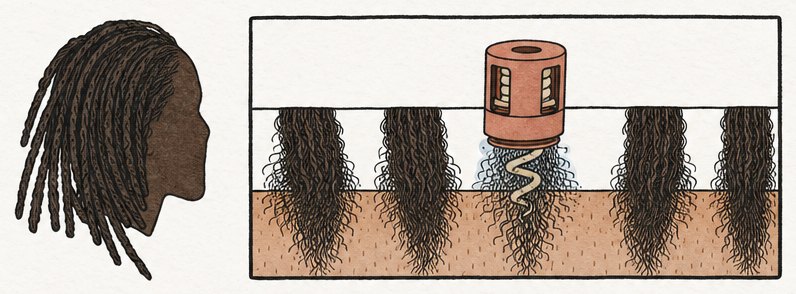
Cross-section showing entry at the root between locs rather than into the loc itself
Should work

Locs, two-strand twists and Bantu knots

Hair bound into units, with scalp visible only between them. The strands pulled towards the root stay penetrable, even on locs just retwisted, and the gap between units is there as well.

What the coil will not do is thread into the solid body of a loc, so do not force it. Ask before spreading locs apart, and ask whether a knot can be moved off a site you need. Locs also add weight, which lifts the cap.

Should work

Box braids and twists with extensions

Square parts, with added hair and added bulk. Small braids take the twist directly; on thicker ones, go in at the strands pulled towards the root, or use the grid of parts.

The coil will not thread into a thick braid itself. Extensions lift the cap at every site, not only the braided ones.

Not yet

Silk press and relaxed hair

Mechanically this is the easy case. The problem is the gel: moisture will revert a silk press and ruin a style someone paid for. Until we have an answer, say so at booking rather than on the day.

Not yet

Wigs, weaves and extensions

A wig, clip-ins or a wrap come off, and what is underneath is usually cornrows, so follow that entry. Works so far after removal.

A sew-in, closure or glued front cannot be removed on the day. Only leave-out areas are reachable, and often there are none. Nothing on the market reaches through bonded hair.

The limit

Twenty-five millimetres.

25 mm

The tip is about 25 mm long, and compressed hair under the cap has to fit inside that. Loose afros up to about 60 mm tall compress enough to be within it. Deeper than that and the tip runs out, whatever the curl pattern. A longer tip is the only way past it, and that is on our list.

Faith, identity and head coverings

Currently excluded, not accommodated.

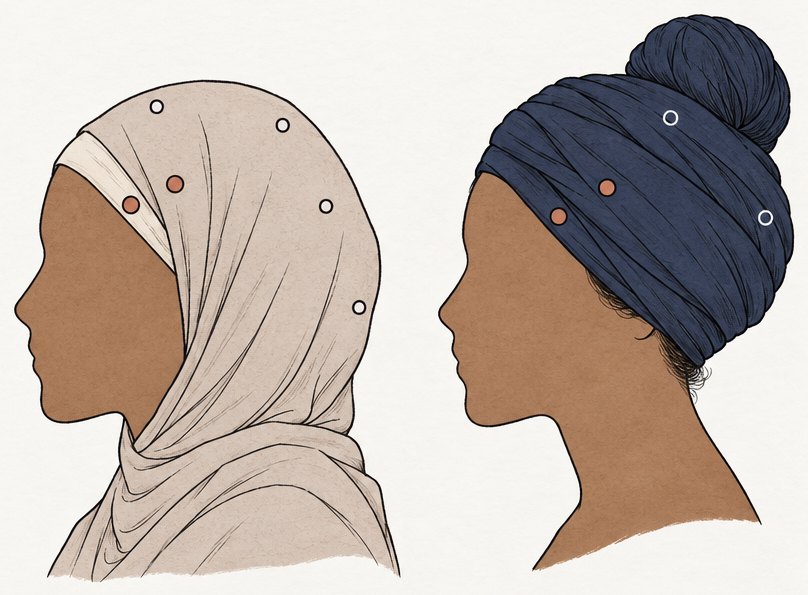
No electrode or cap we know of can record through a covering. The only option today is removal, and for many people that is not something they will agree to. Pretending otherwise helps nobody.

Someone who has paid for braids, or who wears locs as part of who they are, is not obliged to undo them for a recording. Ask at booking rather than on the day, offer a private room and a technician of their chosen gender before they have to ask, and make declining cost them nothing.

Two illustrations of head coverings worn with EEG electrode positions marked
Open problems

What we haven't solved.

No order, no ranking. These are open, and they stay on the page until they are not.

ProblemWho it affects
Reaching hair deeper than 25 mm when compressedLong Type 4, full afros, high-tops
Tall hair pushing the coil off its siteHigh-tops, voluminous hair
Cap lift from volume, extensions or locsAfros, braids, locs
Gel that will not revert a straightened styleSilk press, relaxed
Reaching the scalp under bonded hairSew-ins, closures, glued fronts
Recording with a head covering in placeHijab, turban, tichel

We also check each of these for harm: strands lost, and how disturbed the hair felt after removal.

Contribute

Help us close them.

If you use Syn-R1 on hair marked Should work or Not yet, your session is how that changes. We will help with the protocol, troubleshoot on the day, and credit you in the next edition.

What to recordCurl type, density and length as worn. Style, and whether anything could not be altered.
Per siteWhether the tip reached the scalp, how many turns, time to signal, impedance at ten minutes.
And afterComfort, and any hair disturbance on removal.

With participant consent under your own ethics approval, and nothing identifiable. Send it to admin@synaptiveltd.co.uk.